
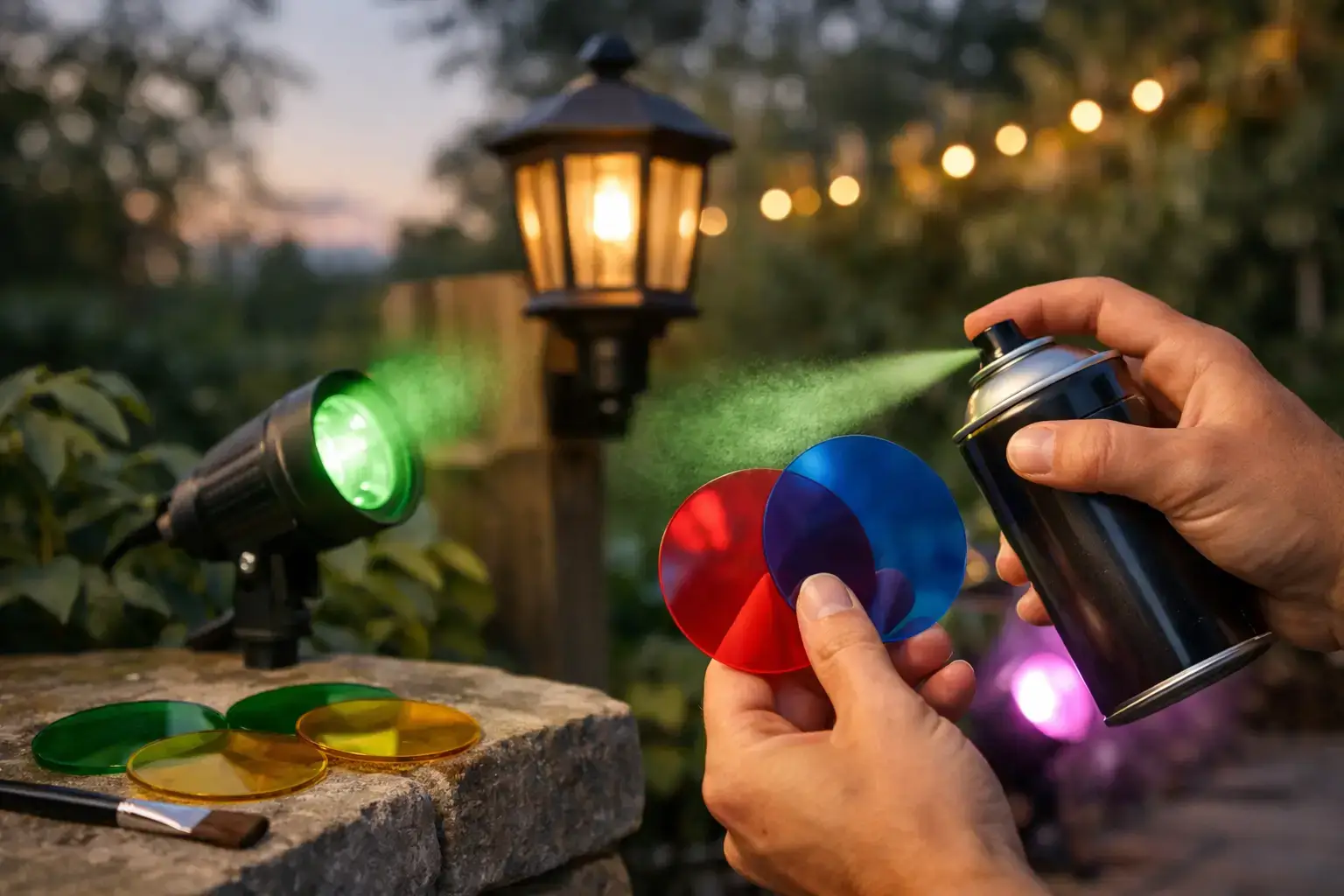
Your landscape lights already know how to make a walkway, tree, or stone facade look great after dark. The frustrating part is that most permanent uplights only shine white. If you are wondering how to color outdoor lights for Halloween, a graduation party, your favorite team, or a brighter holiday display, you do not necessarily need new fixtures, specialty bulbs, or a weekend spent changing wiring.
The right approach depends on the fixtures you have, the color control you want, and how often you plan to change the look. For many homes and commercial properties, adding color is a simple retrofit. For others, smart color-changing fixtures may be worth the larger investment. Here is how to choose the method that makes your exterior stand out for the right reasons.
Before adding any color, identify your fixture type. Most landscape systems use low-voltage LED bullet lights or uplights aimed at trees, columns, garden beds, signs, and architectural features. These compact fixtures are excellent candidates for colored lenses or fitted covers because the white LED stays in place while the lens changes the appearance of the beam.
Also check the fixture’s diameter, shape, and clearance. A cover designed for a small bullet light may not fit a wide floodlight, and a recessed fixture may not leave enough room for an exterior accessory. Measure the outside of the fixture housing rather than guessing. That quick step helps you get a snug fit and an even color effect.
Confirm that your lights are LED. LEDs run much cooler than old halogen lamps, use less energy, and are the practical choice for modern landscape lighting. Still, any accessory placed around a fixture should be made for outdoor heat exposure and should never block a fixture in a way that creates a safety issue.
For existing white LED landscape uplights and bullet fixtures, a colored cover with an integrated lens is often the fastest route from everyday curb appeal to celebration mode. Instead of removing bulbs or opening a fixture, you stretch the cover over the compatible light housing. The colored polycarbonate lens sits over the beam, turning the white output into a vivid wash of color.
This method makes particular sense when you want color for a season, event, or rotating display. Red and green can transform landscaping for Christmas. Orange creates an easy Halloween look. Blue can complement a coastal exterior, a school color, or a winter display. A mix of colors can give a front entry, clubhouse, restaurant patio, or monument sign a more intentional nighttime presence.
Outdoor Light SOC was created for this exact problem: giving existing landscape lights a bold color upgrade without replacing bulbs, fixtures, or wiring. Its patented, one-piece SOC cover is designed for compatible exterior uplighting and bullet-light fixtures, with a heat-resistant stretchable body and an integrated colored lens. The material is rated to withstand temperatures up to 480°F and includes a UV-absorbing additive to help reduce fading outdoors.
Even with LED lighting, switch the system off before installation and let fixtures cool if they have been running. Wipe away dirt, mulch, and moisture so the cover can sit properly. Then stretch the cover over the fixture and position the lens directly in front of the light source. Turn the system back on after each cover is seated.
Stand back and inspect the beam pattern. A fixture aimed into a dense shrub will show color differently than one washing a smooth stucco wall. You may need to tilt the fixture slightly to highlight the feature you want. This is the fun part: small aiming adjustments can make the color look richer and more polished.
Reusable covers offer a major advantage over a permanent lighting change. When the party ends or the season shifts, remove them, store them, and bring them out again next year. No spare colored bulbs to label, no discarded lighting hardware, and no call to an electrician for a simple color refresh.
If you want to switch colors nightly from an app, program scenes, or create moving effects, RGB or RGBW smart landscape fixtures are another option. These fixtures contain color-changing LEDs and typically connect through a dedicated controller, Wi-Fi, Bluetooth, or a low-voltage smart-lighting system.
The upside is flexibility. You can schedule warm white for most nights, choose red for a holiday, and shift to purple and gold for a special event without touching each fixture. For large commercial displays, hospitality spaces, or homeowners who change colors constantly, that convenience can be compelling.
The trade-off is cost and complexity. You may need to replace every fixture you want to control, add a compatible transformer or controller, and learn the app or programming system. Color quality also varies widely. Some RGB fixtures deliver saturated colors beautifully; others produce a weaker wash, especially at longer distances. If your present white landscape lighting works well and you only want color occasionally, a fixture replacement can be more than you need.
Colored LED bulbs can work in porch fixtures, string-light sockets, and certain exterior lamps with standard screw-in bulbs. They are simple to replace and can be a good fit when a single lantern or entry light needs a temporary color change.
They are less useful for sealed landscape uplights, integrated LED fixtures, and small bullet lights that do not use replaceable bulbs. Even where a replacement bulb fits, it may not provide the beam angle needed to light a tree or facade properly. A bulb that shines blue inside a porch lantern is not automatically the right tool for creating a dramatic blue uplight across a mature oak.
Check the fixture label before changing bulbs. Use outdoor-rated LEDs when the bulb is exposed to weather, and do not exceed the fixture’s wattage rating. For low-voltage landscape systems, confirm the bulb voltage as well. A 120-volt bulb and a 12-volt landscape fixture are not interchangeable.
It can be tempting to tape party-cellophane, craft plastic, or theatrical gel over a fixture. It may look fine for a few minutes, but it is not a durable outdoor lighting solution. Thin materials can fade, tear, trap moisture, shift in the wind, or melt when used near a heat source they were not designed to handle.
Painting a lens is also a poor shortcut. Paint often creates uneven light, can reduce output dramatically, and may permanently damage a fixture lens. If you want clean color and want to preserve your equipment, choose a purpose-built, outdoor-rated product designed to fit the fixture and tolerate exterior conditions.
The strongest displays do not necessarily use every color at once. Choose one or two colors that fit the occasion and let your existing landscape lighting do the rest. White path lights paired with colored uplights often look more refined than coloring every fixture on the property.
Warm colors such as red, amber, and orange feel energetic and welcoming. Blue and green tend to create a cooler, more dramatic look on evergreens, water features, and stone. Purple can be striking for Halloween, celebrations, or a modern architectural accent. On light-colored walls, colors usually appear brighter; on dark brick, dense foliage, or large trees, you may need to aim lights closer or use more fixtures for a visible effect.
For HOAs, property managers, and business owners, consistency matters. Repeating the same color along entry landscaping, signage, and key building features creates a professional visual cue without making the property feel overdecorated. Use color to guide attention: toward an entrance, around an event space, or onto a signature tree.
Outdoor lighting lives with rain, irrigation, windblown debris, lawn crews, and changing temperatures. Keep lenses clean, check fixture aim after landscaping work, and make sure cords and low-voltage connections remain protected. If you use removable covers, store them clean and dry between seasons so they are ready for the next celebration.
Be considerate of neighbors, drivers, and guests. Aim uplights down onto landscaping or toward building surfaces rather than into windows or across the street. Rich color should create atmosphere, not glare. A few carefully placed fixtures can make a bigger impression than an overly bright display.
Your exterior lighting does not have to stay locked into one look all year. Start with one focal area – a front tree, entry columns, or a sign – and try a color that fits your next occasion. Once you see what a simple lens change can do after sunset, those everyday white uplights may become your favorite decorating tool.
Error: No feed with the ID 3 found.
Please go to the Instagram Feed settings page to create a feed.